Anyone who wants to successfully list a vacation rental isn't simply selling overnight stays. Guests choose based on the peace of mind of arriving on arrival at exactly what they expected: a suitable location, ample space, clear terms and conditions, and a host who is accessible. Between two similar accommodations, the most compelling promise rarely wins. Usually, the offer that most quickly establishes trust is the one that prevails.
Especially when it comes to vacation rentals, travelers compare very carefully. Families pay attention to beds, kitchen, parking, and washing machine. Couples look for atmosphere, privacy, and location. Groups of friends need transparent occupancy, enough bathrooms, and a straightforward check-in. Your listing must answer these questions before they are even asked.
## 1. Define the target group before placing the advertisement
Don't start with the description, but with the question: Who is this accommodation really suitable for? A city apartment for two people will be presented differently than a house by the sea for eight guests or a quiet place for a longer stay. Trying to appeal to all travelers at once often results in being too general.
Clearly define the actual maximum number of guests, bedrooms, sleeping arrangements, and bathrooms. A sofa bed is a sofa bed—not automatically a full-fledged bedroom. Honest information prevents disappointment, bad reviews, and last-minute inquiries.
The location also deserves a clear description. Is the accommodation centrally located, close to the beach, secluded, family-friendly, or easily accessible? Specify concrete advantages without creating false expectations. "Quiet location with a short drive to the beach" is more helpful than "perfect beachfront location" if a car is necessary.
## 2. Write a title and description that provides booking value
A good title combines the type of accommodation, its biggest advantage, and, if applicable, its location. "Bright villa with pool for 6 guests near the coast" immediately conveys more than "Dreamlike accommodation." Avoid superlatives unless they are supported by pictures and details. Discerning travelers quickly recognize whether a text has substance.
The first two sentences of the description should provide the most important information for potential guests: Who is the accommodation suitable for, what makes it special, and what is it like to stay there? Practical information follows. Don't just mention that there's a kitchen, but specify whether it's well-equipped for shared dinners. Don't just describe Wi-Fi; mention a reliable workspace if one is available.
A convincing structure can answer these four questions:
- How many guests can comfortably stay in the accommodation?
- What amenities make the stay easier or more special?
- What is nearby and how can you get there?
- What rules and procedures apply on site?
The tone can be sophisticated, but should always remain specific. A private terrace, air conditioning, secure parking, or a heated pool are strong selling points if they are actually available and clearly explained.
## 3. Take photos that provide orientation
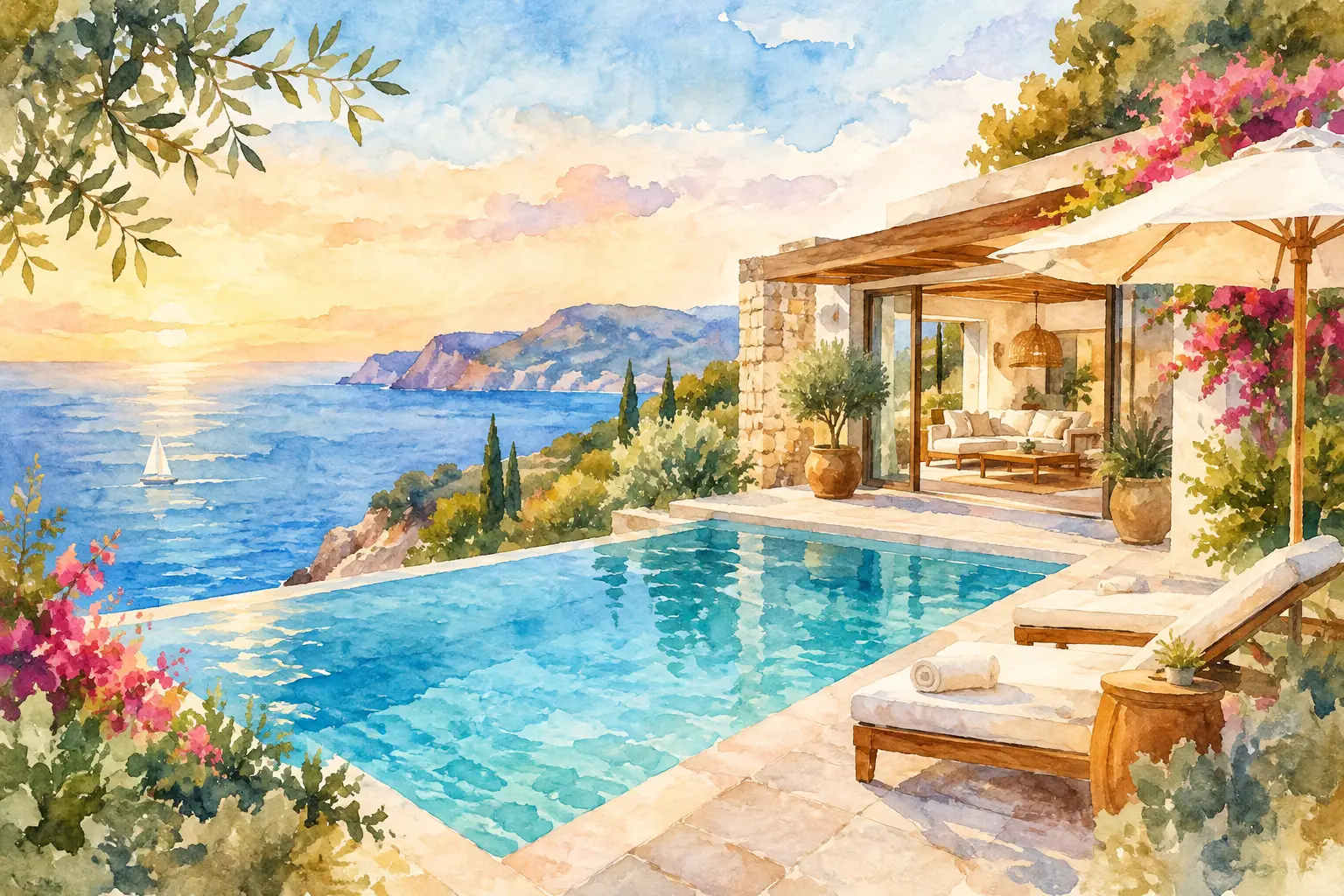
Photos are the moment when interest turns into a booking intention. Opt for bright, recent shots that show the rooms fully and realistically. The first image should highlight the property's strongest, most distinctive feature—such as the view, the pool, the living area, or the terrace. A dark hallway or a close-up of decorations is rarely suitable.
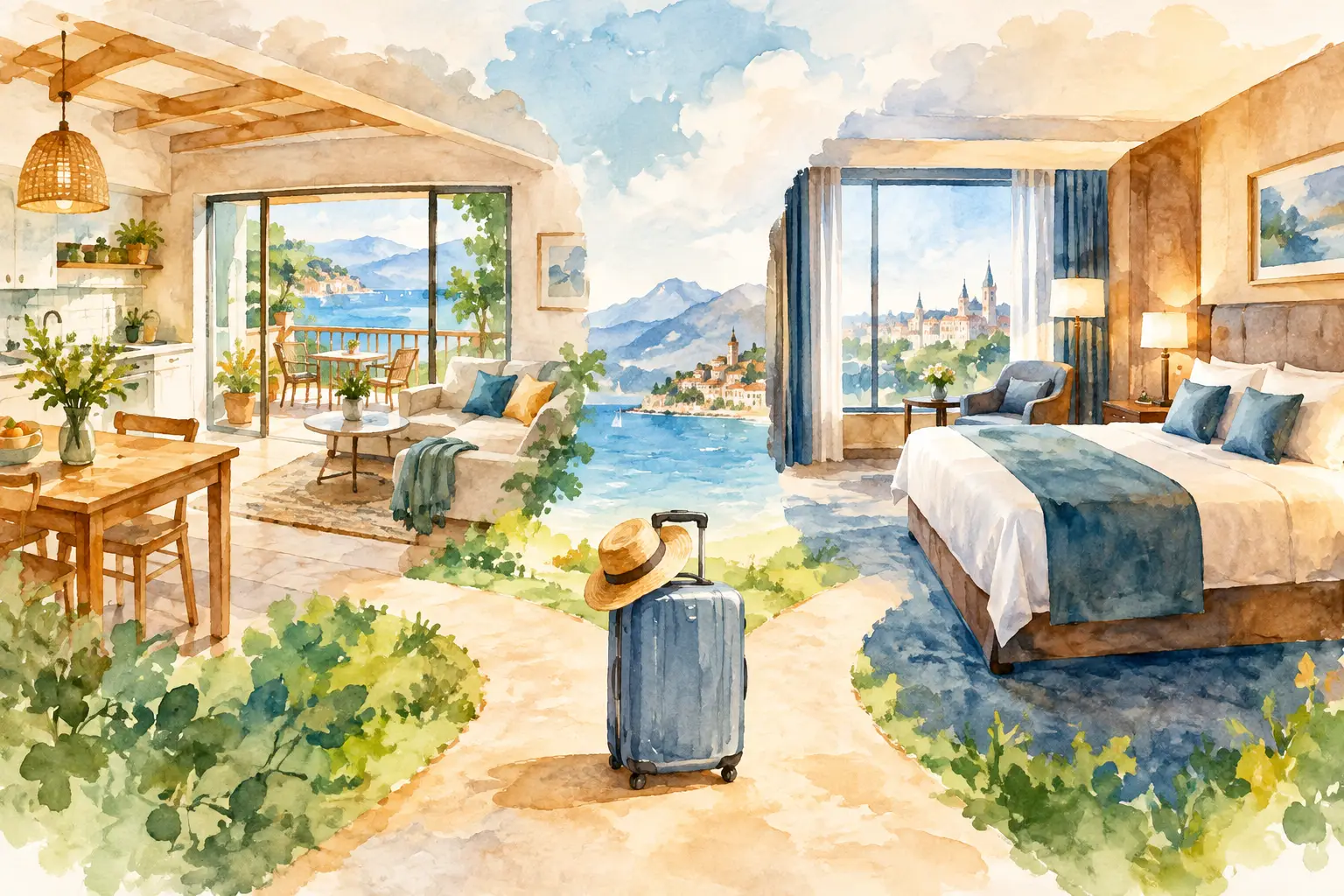
More important than mere aesthetics is orientation. Show the living room, kitchen, each bedroom, bathrooms, outdoor areas, entrance hall, and, if applicable, parking or workspace. Guests want to see what their home will be like. Avoid strong wide-angle distortions and excessive image editing. A room that appears significantly larger in a photo than it actually is will undermine trust.
Pay attention to the order: First the strongest impression, then the main common areas, followed by bedrooms and bathrooms, and finally details and the surroundings. Seasonal photos are useful if they remain clearly identifiable as such. A summer photo of the pool is only helpful for a winter booking if availability is clearly stated.
## 4. Specify all equipment details in a filterable format.
Many bookings are made using filters. If an amenity is missing from the listing, your accommodation might not appear, even if it would be a perfect fit. Therefore, please check all details carefully: Wi-Fi, air conditioning, heating, kitchen, washing machine, parking, elevator, pool, pets allowed, crib, accessibility, and outdoor areas.
Precision is key. Free Wi-Fi is different from a stable internet connection for video calls. Parking on the property is different from public street parking. "Beach access" shouldn't be used if the beach is only reachable by a long drive. Such distinctions protect your rating and help guests make an informed decision.
Also include details that are crucial for everyday use: number of steps, access code or key handover, coffee machine, bed linen, towels, barbecue, charging station, or potential noise levels. Not every piece of information belongs in the first paragraph, but it should be easily accessible before booking.
## 5. Design prices so that they remain understandable.
A low introductory price can attract attention, but it's not a sustainable advantage if mandatory costs only become apparent later. Travelers calculate the total price. Therefore, clearly display the nightly rate, cleaning fee, deposit, taxes, and any additional charges. This reduces booking abandonment and creates a better foundation for positive reviews.
Your pricing strategy should take into account the season, local demand, days of the week, events, and minimum stay requirements. A different minimum stay might be appropriate for a long weekend in a popular region than for a quiet week off-season. If there are significant gaps in your calendar, an attractive price for last-minute bookings may be more effective than a fixed target price.
A discount is only worthwhile if it's justifiable – for example, for longer stays, early bookings, or a specific off-peak travel period. Price reductions without a clear rationale can diminish the value of high-quality accommodation. The goal isn't always to be the cheapest, but to offer a compelling balance of price, performance, and trust.
## 6. Understanding rules and arrival as a service
House rules don't come across as unfriendly if they are clearly, reasonably, and communicated well in advance. Specify check-in and check-out times, smoking policy, pet policy, maximum number of guests, quiet hours, and guidelines for parties. If a security deposit or identity verification is required, explain the procedure clearly.
Getting here is especially important. Please send directions, parking information, access details, and contact information well in advance. International guests benefit from simple, clear wording and a summary of the most important information. Anyone arriving late after a flight doesn't want to be left wondering which entrance to use.
A brief digital welcome message makes the stay noticeably more pleasant. It can include information on Wi-Fi access, waste disposal, how to use important devices, recommendations for the surrounding area, and emergency assistance. This saves on messaging and conveys professional hospitality.
## 7. Respond quickly and actively earn ratings
An attractive advertisement loses its effectiveness if questions remain unanswered for days. Respond promptly, politely, and specifically—especially regarding availability, accommodation, parking, and directions. If a request cannot be fulfilled, state this clearly and offer a suitable alternative if possible. Honesty is more likely to lead to a successful booking than a hasty "yes."
After their stay, a short, personal message is always appreciated. Thank them for their visit and ask for a review, without being pushy. Reviews are a sign of trust for new guests, but also valuable feedback for you. Respond to criticism objectively: thank them for the feedback, explain the context if necessary, and only suggest improvements if you plan to implement them.
Anyone presenting their holiday apartment via a [trusted marketplace](https://room4me.eu/advertise) like ROOM4ME should make the same standards visible in their own presentation: reliable information, secure processes and a service that offers guidance from the first search to departure.
Creating a listing isn't a one-time task. Regularly check photos, prices, availability, and guest feedback. Even a more precise headline, a missing amenity, or clearer directions can turn an undecided visitor into a guest who books with confidence.